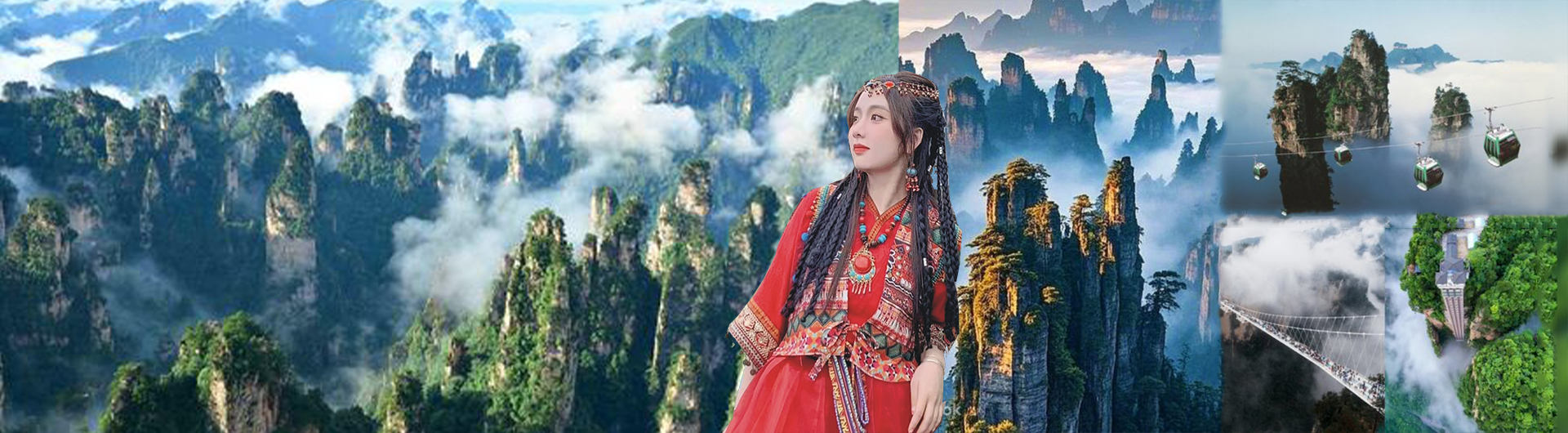
What are the must‑visit attractions when entering Zhangjiajie, Hunan, China? Any netizens have recommendations?
What are the must‑visit attractions for a trip to Zhangjiajie, Fenghuang Ancient City in Western Hunan, Furong Town, Chadong Ancient Town and Chenzhou in China? How many days is suitable for the tour? How to travel in a relaxed and hassle‑free way? Any recommendations from friends who have been there? It would be even better if you could recommend a good local guide. Thanks a lot!

Hi, I'm Fabio Nodari, a travel blogger and photographer living in China for many years. All guides are drawn from my personal experiences. No AI-generated or third-party texts.
Ciao, sono Fabio, fotografo e blogger e vivo in Cina da molti anni. Le mie guide riguardano luoghi che ho visitato personalmente. Nessun testo generato da IA o da terze parti.
Zhangjiajie (张家界) is probably the most spectacular scenic area in China. Find out some of the most interesting things to see and do in this beautiful place in Hunan province.
Zhangjiajie's towering sandstone pillars covered in lush vegetation and shrouded in mist.
A few places in China are as iconic as the mountains of Zhangjiajie (张家界). Even if you are not familiar with the Chinese name, you’ve probably come across their image somewhere. These towering sandstone pillars, often wrapped in a sea of mist, have been a favourite subject of traditional Chinese paintings for centuries.
More recently, they became famous worldwide when the movie Avatar drew inspiration from one of the park’s most striking formations, the Heavenly Pillar, to create Pandora’s floating mountains.
If you want to explore another mountain with equally impressive landscapes, take a look at my guide to Yellow Mountain (Huangshan).
General info about Zhangjiajie
Zhangjiajie's towering sandstone pillars covered in lush green forest.
The first thing to realize when talking about Zhangjiajie is that the name can cause a lot of confusion since it can refer to different places, including:
Zhangjiajie City (about 30 Km from the National Park) Feel free to contact me for travel plans.
Zhangjiajie National Park (which includes several different destinations, such as the Wulingyuan Scenic Area)
Zhangjiajie National Forest (for clarity, it’s the place with the Avatar Mountains, even though I don’t like this expression, since, in my opinion, it is much more than that and part of the Wulingyuan Scenic Area).
Some names sound similar, such as Zhangjiajie, Yuanjiajie, and Yangjiajie, which adds to the confusion. As you’ll see, visiting the different parks can be pretty expensive.
Zhangjiajie: how to get there and how long to stay
Bailong Elevator in Zhangjiajie, towering through karst mountains. Lush greenery surrounds the scenic spot.
You can get to Zhangjiajie by plane, train (https://m.traveltotang.com), or bus. As you can imagine, this place is well-connected to the rest of China.
As for how long to stay, it really depends on how much of this vast park you want to see. In my opinion, the bare minimum is three days and two nights, which allows you to visit the main highlights without rushing. If you have extra time, you can explore the quieter, less-visited areas at a more relaxed pace. Keep in mind that the ticket for the Wulingyuan Scenic Area is valid for four consecutive days, which works perfectly for a short stay.
Wulingyuan Scenic Area
Zhangjiajie National Forest Park: Towering sandstone pillars covered in lush green vegetation, misty landscape.
In 1992, the Wulingyuan Scenic Area in Zhangjiajie was included in the UNESCO World Heritage List. It is a pretty big area that covers 690 square kilometres and consists of four parts:
Zhangjiajie National Forest Park
Suoxi Valley Nature Reserve
Tianzi Mountain Nature Reserve
The newly added Yangjiajie Scenic Area
You can get to the Wulingyuan Scenic Area by bus from the Zhangjiajie train station, which takes about 40 minutes. If you prefer private transportation, you can call a Didi driver, the Chinese version of Uber.
Remember to check what is included in your Park ticket, as some bundles only cover the entrance fee and may not include other attractions, such as the Bailong elevator in Yuanjiajie, the Yangjiajie cable car, or other buses/cable cars/elevators within the park.
Zhangjiajie National Forest Park
Zhangjiajie tourism map showing attractions like Tianmen Mountain, Grand Canyon, and glass bridge.
In 1982, it was designated China’s first national forest park, covering 4,810 ha. Zhangjiajie National Forest Park is part of the Wulingyuan Scenic Area. In 2004, Zhangjiajie Geopark was listed as a UNESCO Global Geopark. Zhangjiajie National Forest Park is divided into:
Huangshizhai (黄石寨)
Tianzishan (天子山)
Yuanjiajie (袁家界)
Yangjiajie (杨家界)
I recommend staying near the National Park area, not near Tianmen Mountain.
The Pullman Hotel is a convenient option close to the park entrance. If you prefer something more unique and authentic, this is the option for you.
Huangshizhai (黄石寨)
Zhangjiajie National Forest Park map showing Huangshi Village scenic area.
Huangshizhai means Yellow Stone Village, which can be confusing since there’s no stone village. It was the first area developed for tourists, meaning there are slightly fewer tourists than in Yuanjiajie (the newest area).
Zhangjiajie cable car view: towering sandstone pillars and lush greenery in the scenic area.
You can hike up to the mountain (usually 2-3 hours) or take the scenic cable car to the top.
As you can see from the map above, you can do a sort of loop to explore the mountain and the beautiful peaks. Walking around it can take 2-3 hours, depending on how often you stop to take pictures. Don’t miss the Five Fingers Peak, the landmark of Huangshizhai.
After that, you can take the cable car down and then a shuttle bus to Jinbianxi 金鞭溪 (also known as Golden Whip Brook). This beautiful 7.5 Km trail will take you around the heart of Zhangjiajie’s stunning sandstone pillars, and it’s worth it if you have enough time.
Tianzi Mountain Nature Reserve/Tianzi Shan (天子山)
Zhangjiajie's towering sandstone pillars with lush green trees, shrouded in mist.
Though Tianzi Mountain Nature Reserve covers just 67 square kilometers, making it the smallest of Zhangjiajie’s four main scenic areas, its dramatic peaks are the most iconic.
Here, you can often see the sandstone peaks partially hidden in fog and, if lucky, a sea of clouds. The highest peak of Tianzi Mountain is 1262.5 meters above sea level.
Tianzi Mountain is divided into three parts: Helong Park (贺龙公园), which is where the famous Imperial Writing Brush Peak (Yubi Peak) is located. The other two are Shentang Bay (神堂湾) and Sanchakou (三岔口).
Yuanjiajie Scenic Area (袁家界)
Zhangjiajie's stunning pillar mountains shrouded in mist.
Along with Tianzi Mountain, the Yuanjiajie Scenic Area is often cited as the inspiration for the Avatar movie, thanks to its beautiful peaks covered in lush vegetation. Since April 2002, the Bailong elevator has enabled access to the area in merely two minutes.
It’s claimed to be the world’s highest and heaviest outdoor elevator. Before its opening, people had to hike for about 2 hours. It is one of the most spectacular places in the world.
Map of Yuanjiajie Scenic Zone in Zhangjiajie, showing trails, viewing platforms, and key attractions.
The area is vast, and to get there, you must first take a shuttle bus to the elevator. Then you can buy an elevator ticket. Once at the top of the mountain, you must take another shuttle bus to the beginning of the trail, where you will find a loop trail with many scenic viewpoints over the peaks.
Yangjiajie Scenic Area (杨家界)
Zhangjiajie National Forest Park's stunning sandstone pillars and lush green forest, part of a Zhangjiajie DIY travel guide.
Connected to the Yuanjiajie Scenic Area, Yangjiajie lies northwest of Zhangjiajie Forest Park and features beautiful rock formations.
It’s a rugged and less-crowded gem within Zhangjiajie National Park, famous for its wild, fortress-like sandstone pillars and hiking trails. The most famous spots are the Natural Great Wall (天然长城), a dramatic row of towering peaks, and the One Step to Heaven (一步登天), a small viewing deck that you can reach by climbing a very narrow iron staircase. Only one person can pass at a time. Clouds often surround the mountains.
Unlike the more popular Yuanjiajie, Yangjiajie offers a more off-the-beaten-path experience.
Suoxi Valley Nature Reserve/Suoxiyu (索溪峪)
Meaning “foggy mountain village” in the Tujia language (a local ethnic group ); the Suoxi Valley Nature Reserve is located in the northeast part of the Wulingyuan Scenic Area. These are the most famous spots:
Ten-mile Natural Gallery/Shili Hualang (十里画廊)
Zhangjiajie National Forest Park: Monorail view of sandstone pillars and lush greenery.
The Ten-mile Natural Gallery is a 5.8 km-long valley in the northeastern part of the Wulingyuan Scenic Area. You can get there by bus. You can then walk or take the electric monorail. At the end of the valley, you’ll find many monkeys.
Yellow Dragon Cave/ Huanglong Dong (黄龙洞)
Zhangjiajie cave interior with winding stairs and colorful lights, travel guide.
Yellow Dragon Cave is 7.5 kilometers long and 140 meters deep, making it the largest karst cave in China. It has an underground river (not as beautiful as the Underground River in Palawan), several ponds, and tons of stalagmites and stalactites carefully illuminated with disco lights, as is the case in every touristic cave in China.
Honestly, it’s not worth a visit. Jiuxiang caves in Yunnan are better. Also, you’ll find lots of tourists, and there isn’t much nature left inside the cave.
If you want to go, take a bus at Wulingyuan Bus Station or the Wulingyuan Scenic Area, get off at Yellow Dragon Cave (黄龙洞), and walk for about 20 minutes.
The Zhangjiajie Glass Bridge (张家界大峡谷玻璃桥) and Grand Canyon (张家界大峡谷)
Feel free to contact me for travel plans.![]() traveltotang@gmail.com Tel:
traveltotang@gmail.com Tel:
Zhangjiajie Grand Canyon Glass Bridge, China. Tourists walk across the transparent bridge.
The Glass Bridge is another of Zhangjiajie’s most famous landmarks, making it one of the busiest spots. It takes about an hour to reach the canyon from Zhangjiajie National Forest Park.
Once there, you’ll find plenty of activities to try. The most thrilling is bungee jumping straight off the glass bridge, but you can also tackle a via ferrata along the side of the mountain. After crossing the bridge, you can either take an elevator down to the canyon floor or choose a more adventurous route: zipline across the canyon and then descend on a slide.
Turquoise river flowing through lush green Zhangjiajie mountains.
Wooden walkway along a river in Zhangjiajie National Forest Park, China. Lush green scenery and waterfalls.
Wooden walkway along the turquoise Baofeng Lake in Zhangjiajie, surrounded by lush green trees.
From the bottom, a scenic trail stretches for about 4 km, offering a different perspective of the landscape. It is not very crowded, and the view is very peaceful. It reminded me of Vintgar Gorge in Slovenia, but this valley is more spectacular.
I recommend visiting the canyon only if you have extra time in Zhangjiajie, as it takes an additional half day.
Tianmen Mountain (天门山)
Tianmen Cave stairway, Zhangjiajie. Lush greenery surrounds the path to the iconic landmark.
Located about 10 kilometers south of Zhangjiajie City, Tianmen Mountain (天门山) is accessible by cable car or by bus. The view from the top of the mountain is fantastic, and if you are afraid of heights, you might have some problems. The mountain has an elevation of 1518 meters.
Zhangjiajie mountains shrouded in mist, with cable cars visible. Scenic spot from travel guide.
Long escalator in Zhangjiajie leading to scenic spots. People riding up. Arched ceiling with lighting.
Glass bridges and wooden paths connect the other peaks in the area, and it takes at least half a day to explore the main areas. If you feel lazy and don’t want to walk up (or down) to the Tiananmen Gate, you can use the escalators.
There are about 30 of them, totaling 897 meters in what must be one of the world’s longest escalator systems.
Pro Tip: If there are too many people in line to board the cable car, I recommend buying the VIP ticket, which lets you skip the queue.
Other things to do in Zhangjiajie
If you have some free time in Zhangjiajie in the evening, you can see two performances, one in a theater and the other below Tianmen Mountain.
Charming Xiangxi in the Xiangxi Grand Theatre (湘西大剧院)
Zhangjiajie performance with dancers in traditional clothing and acrobats on a wooden structure.
This performance focuses on the Tujia, Bai, and Miao minorities and is quite interesting, especially if you have never seen this kind of performance before. The show is divided into two parts: the first inside the theater, the second outside. After the first part, you can return to the hotel. The second part is basically a sales pitch.
Mount Tianmen Fox Fairy (天门狐仙表演)
Zhangjiajie show: Man in orange stands among women in traditional blue costumes.
Zhangjiajie performance under a full moon, figures in costume on tiered platforms.
Zhangjiajie performance with a bridge and building in the background.
Woman in costume on red dragon stage. Zhangjiajie performance art.
This is easily one of the best shows I’ve seen in China. It tells the story of the legendary Fox Fairy, with truly outstanding choreography. I highly recommend watching it: you won’t regret it. The show doesn’t usually run in January and February. If it’s raining, it’s worth getting a VIP ticket, as those seats are under cover.
Rafting in the Maoyan River (茅岩河)
Rafting on river through lush Zhangjiajie mountains. Zhangjiajie DIY travel adventure.
Beautiful waterfall cascading into a pool in Zhangjiajie, China.
White water rafting adventure in Zhangjiajie, China. People in raft navigating rapids with lush green background.
The Maoyan River doesn’t seem very popular right now, probably because of its distance from Zhangjiajie (about two hours); however, it’s very spectacular.
While exploring the river by boat, you can see the beautiful mountains surrounding it and local people on tiny boats as they travel back and forth between their remote houses and nearby villages.
It was a great experience, with no tourists and surrounded by nature. I know it’s a bit inconvenient to get there, but if you have the time, it’s worth it. Remember, it’s better to wear a swimsuit. It may seem obvious, but before we got there and saw with our own eyes what awaited us, the guide had told us we could easily keep our camera and shoes. Luckily, we didn’t, because we ended up completely soaked.
Best time to visit Zhangjiajie and where to stay
Traveler in orange raincoat and umbrella views Zhangjiajie's scenic peaks in the fog. "Writing Brush Peaks" sign visible.
As you can see from the pictures, this part of China is wonderful and green, but it also rains a lot. My suggestion is to visit Zhangjiajie in the spring or fall.
The best time would probably be between November and April: fewer chances of rain, though the temperature is a bit low (around 8°C). April is usually the best month.
Please avoid the national holidays at all costs! Zhangjiajie is crowded year-round, but I can’t imagine what it will be like in the first week of May or October. A friend told me you can expect to queue for 2 hours only to get into the Bailong elevator.
You have two main accommodation options: a hotel near the Zhangjiajie National Forest Park entrance or a stay in Zhangjiajie City. As I previously explained, the first option is more convenient for visiting the “Avatar mountains” and the second for visiting Tianmen Mountain. Either way, you can find hotels for all budgets on Booking.com or Trip.com.
List of prices for Zhangjiajie
Aerial view of Zhangjiajie's lush green forest with towering rock formations and blooming trees.
This is the list of tickets you’ll need to pay for to visit the different areas in Zhangjiajie. As you can see, it’s very expensive and sometimes confusing. If you decide to visit all the areas, you’ll have to pay over 1,300 RMB if you buy the tickets individually.
Prices are indicative:
1. Tianmenshan Glass Road Scenic Area: 261 RMB
2. Zhangjiajie National Forest Park Scenic Area: 248 RMB
3. Grand Canyon Glass Bridge Scenic Area: 248 RMB
4. Baofeng Lake: 96 RMB
5. Huanglongdong: 100 RMB
6. One-way Yangjiajie cableway: 76 yuan (offseason: 46 RMB)
7. Tianzishan cableway: 72 yuan (offseason: 43 RMB)
8. Bailong Elevator: 72 yuan (offseason: 43 RMB)
9. Shili Gallery: 38 RMB
10. Huangshizhai Ropeway: 65 RMB
11. Glass Bridge Treasure Hunt: 35 RMB
12. Tianmenshan escalators: 32 RMB (offseason: 20 RMB)
13. Glass plank road: 5 RMB shoe cover
Fortunately, you can purchase them through specific packages tailored to the area you wish to visit. You can find them on Trip.com (here’s the link to buy the tickets). If it doesn’t work, change the app’s language to English (if you use it in a different language). That should fix the problem. I recommend buying the tickets a few days in advance.
Tour or DIY?
Joining a guided tour can be a great option to save time on logistics, get insider tips, and make the most of your visit without worrying about transport or tickets. A good guide can also help you avoid crowds and share interesting cultural and historical details you might otherwise miss.
Send me a DM on Instagram if you need the contact of a local guide for several days.![]() Alternatively, you can book this one-day tour, which is well-organized and not very expensive. Regardless of your choice, don’t forget to get travel insurance. I recommend this one.
Alternatively, you can book this one-day tour, which is well-organized and not very expensive. Regardless of your choice, don’t forget to get travel insurance. I recommend this one.
How to Visit Zhangjiajie – Furong – Fenghuang – Fanjingshan
Zhangjiajie's towering sandstone pillars covered in lush green forest.
Furong Zhen Old Town aerial view with waterfalls, traditional architecture, and lush green landscape.
Fenghuang Ancient Town stilt houses illuminated at dusk, Hunan 2024.
One of the most common questions I get is: How can you visit these areas independently? To keep it simple, you can visit Fanjingshan first, then Fenghuang, Furong, and finally Zhangjiajie, or do the reverse. If you’re not familiar with these places, you can read my guides to Fenghuang here, to Furong, and to Fanjingshan.
Zhangjiajie to Furong Town route map showing 4 hr 47 min travel time and 312 km distance.
Keep in mind that Zhangjiajie has an airport, while Fenghuang does not. However, you can fly to Tongren (同仁) in nearby Guizhou, just a 45-minute drive away, which is also close to Fanjingshan. Furong is located roughly halfway between Fenghuang and Zhangjiajie.
These are the most common itineraries, and the order in which you follow them largely depends on where you’re arriving from and which direction you plan to continue.
Tongren (by train or plane) → Fanjingshan (by car or bus) → Fenghuang (by car or bus) → Furong (by car or train) → Zhangjiajie (by car or train)
Zhangjiajie (by train or plane) → Furong (by car or train) → Fenghuang (by car or bus) → Fanjingshan (by car or bus) → Tongren (by train or plane)
Final thoughts about my trip
Group of travelers at a waterfall in Zhangjiajie, enjoying the scenic spots.
I have mixed feelings about Zhangjiajie, much like those I have about other very popular and beautiful destinations in China, such as Xijiang Miao Village in Guizhou.
On one hand, I must admit that so far, I haven’t seen anything like Zhangjiajie: it’s simply otherworldly, a monument to the forces of nature that makes all of us feel small. It doesn’t matter how many times you’ve seen pictures of this place. Once you step into the park, you WILL be amazed, no doubt about it. However, the way the area is managed is an entirely different story.
If you have spent some time on Google looking for information about the park, you’ll encounter the same complaints repeatedly: it’s overcrowded, overdeveloped, and overpriced. This is a problem in almost all the major scenic areas I visited in China (classified with an AAAAA).
Zhangjiajie's stunning sandstone pillars rise above lush greenery, showcasing the unique landscape.
The problem isn’t strictly about the number of tourists, but mainly about how tourist areas are developed. Building cable cars, elevators, escalators, electric trains, McDonald’s, KFC, and so on only attracts tourists who are too lazy to walk 50 meters and, honestly, have no real interest in the beauty of nature but just want to take selfies to post on WeChat. This isn’t a problem unique to China, but it’s undeniable that with such a large population, these issues become more noticeable.
I’d love to know your feedback, though. Have you visited Zhangjiajie? What were your impressions?
I've carefully read both articles and really want to go. I'll discuss it with my family and consult .
I signed up for a tour with them. They provide great service, are very patient, and give thorough explanations. Highly recommended. You can consult them if needed.
Haha, what a coincidence! My friend also recommended to me. It just shows she’s really good. I didn’t expect so many people to recommend her. I’ll add her as a backup contact for now, and I’ll definitely take my family there when I get the chance.